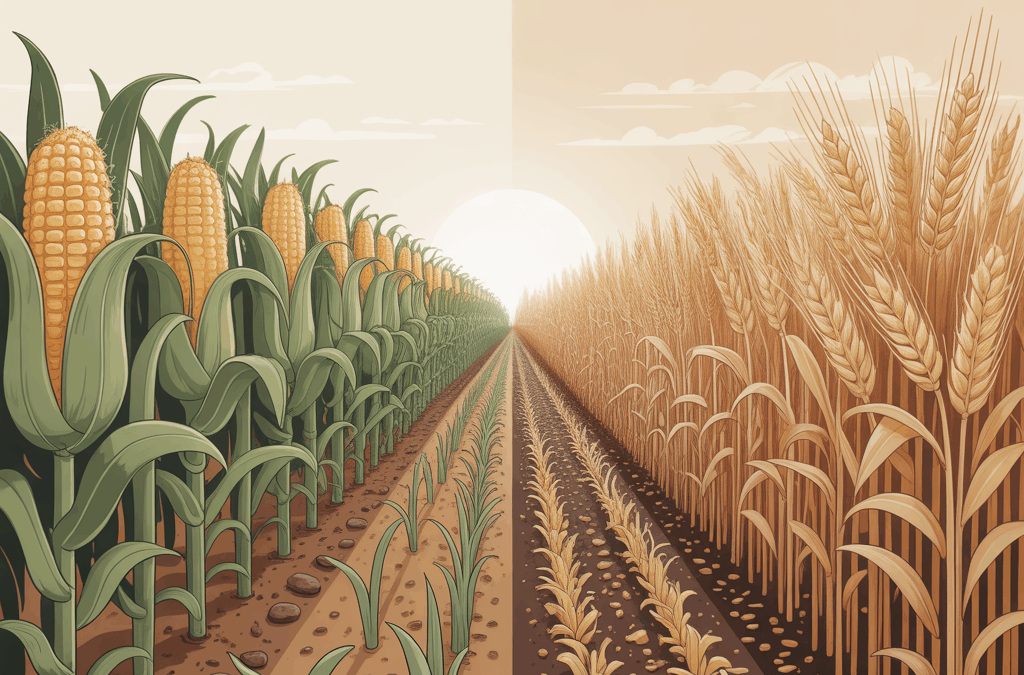
History remembers agriculture by its revolutions. The Green Revolution of the mid-20th century armed farmers with high-yielding varieties, synthetic fertilizers, and pesticides. It fed millions, lifted nations out of famine, and turned scarcity into surplus. Yet, beneath the triumph lay an unintended cost: exhausted soils, poisoned waters, vanishing biodiversity, and farming communities locked into a treadmill of inputs.
Today, the clarion call of the Brown Revolution rises—not as an echo of the past, but as a transformative paradigm for the future. This revolution is not about squeezing more grain from every acre at any cost; it is about restoring balance, reviving soil vitality, and ensuring that prosperity endures across generations. Where earlier revolutions extracted from the land, the Brown Revolution heals, protects, and enriches it.
Soil: The Bedrock of Life
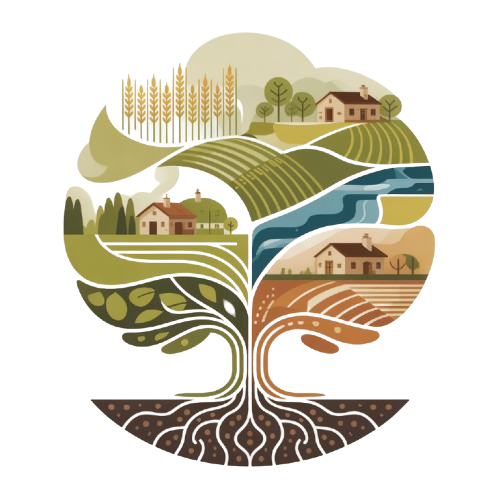
The soil beneath our feet is more than dirt. It is a living matrix, teeming with microorganisms, fungi, and insects that sustain the biosphere. A spoonful of healthy soil can host billions of microbial lives, weaving invisible networks that cycle nutrients, store carbon, and shield plants from disease. Degrade this living foundation, and not only do crops fail, but ecosystems collapse, climates destabilize, and communities unravel.
The Brown Revolution recognizes soil as the true capital of agriculture. It places soil health—not short-term yield—at the center of farming practice. The principle is simple yet profound: when soil thrives, everything else follows.
Beyond Compost and Vermiculture
In the early days of “organic” alternatives, regenerative practices often circled around composting crop residues, promoting vermiculture, or avoiding chemical sprays. These were important beginnings, but the challenges of the 21st century—climate change, population growth, shrinking landholdings—demand a far bolder leap.
The Brown Revolution is not nostalgia for pre-industrial farming; it is the fusion of ecological wisdom with scientific innovation. Today, farmers and scientists are reaching beyond earthworms and compost pits, tapping into next-generation biology and artificial intelligence to reimagine how soils can be nurtured and sustained.
Next-Generation Biology: Decoding the Soil’s Genome
If the Green Revolution was powered by seed breeding, the Brown Revolution is being powered by the biology of the unseen. Advances in genomics and microbiome science now allow us to decode the DNA of entire soil ecosystems. We can identify beneficial microbes that fix nitrogen, solubilize phosphorus, or produce natural antibiotics against pathogens.
Instead of blanketing fields with chemical fertilizers, tailored microbial consortia can be introduced—living cocktails designed to regenerate soil fertility and resilience. Biotechnologists are creating bio-stimulants and nano-formulations that enhance photosynthesis and root growth, while biorefineries convert crop residues into high-value bio-inputs rather than pollutants.
This isn’t just science—it is stewardship at a molecular level, ensuring that every teaspoon of soil regains its vitality.
Artificial Intelligence: From Data to Wisdom
Enter AI, the new ally of the farmer. Where nature’s processes are complex and often invisible, AI shines as an interpreter, revealing patterns and predicting outcomes. With sensors embedded in fields, drones scanning crops, and satellites tracking soil moisture, data streams now flow from the farm like never before.
Artificial intelligence turns these torrents into insights:
- Precision soil mapping to identify nutrient deficiencies down to a square meter.
- Predictive models that forecast pest outbreaks or soil carbon levels.
- Decision-support systems that recommend the right regenerative intervention—whether biofertilizers, crop rotations, or cover crops—at the right time.
The synergy between biology and AI enables what no human eye or intuition alone can grasp: a dynamic, real-time understanding of soil as a living system. It is this integration that lifts the Brown Revolution beyond philosophy into practice.
Climate Stability Through Soil
The Brown Revolution also arrives as a climate imperative. Healthy soils are the planet’s most democratic carbon bank. For centuries, soils stored vast amounts of carbon, only to release it through deforestation, over-ploughing, and chemical overloads. Regenerating soil means recapturing this carbon, locking it away where it belongs, and helping cool a warming Earth.
Farmers thus become not just food producers but climate custodians. Every hectare of soil restored is a hedge against floods, droughts, and storms. Every tonne of carbon sequestered is a step toward climate stability.
Human Well-Being Rooted in Soil
When we speak of healthy soils, we are also speaking of healthy bodies and minds. Nutrient-rich soils yield nutrient-dense crops, reducing malnutrition. Reduced dependence on chemicals lowers the incidence of cancers and neurological disorders linked to pesticide exposure. Revitalized soils sustain rural communities with dignity, reversing cycles of distress migration.
The Brown Revolution, therefore, is not a niche farmer’s movement; it is a public health mission, an ecological restoration project, and a moral commitment rolled into one.
From India to the World
India, the cradle of the Green Revolution, stands uniquely placed to lead the Brown Revolution. The philosophy of “Prakriti” (nature) and “Dharti Mata” (Mother Earth) resonates deeply with regenerative ideals. Grassroots experiments in Andhra Pradesh’s Zero-Budget Natural Farming, Sikkim’s organic transition, and countless farmer-led innovations across states offer living laboratories.
Globally, Africa, Australia, and Latin America—lands facing soil degradation and climate extremes—are converging toward the same vision. The Brown Revolution is not bounded by borders; it is humanity’s shared covenant with the earth.
A Call to Arms
Revolutions are born not in laboratories alone but in the spirit of people. The Brown Revolution calls upon scientists, farmers, policymakers, entrepreneurs, and citizens to align under one banner: soil first. It asks us to reject extractive greed and embrace regenerative wisdom. It demands that we treat soil not as a commodity to be mined but as a community to be cherished.
Where the Green Revolution was about feeding the world, the Brown Revolution is about ensuring the world remains feedable. Where the former was about abundance today, the latter is about abundance forever.
The soil is waiting. The tools of next-generation biology and AI are in our hands. The future of farming—and indeed, of civilization—depends on whether we heed this call.