Regenerative Agriculture: Restoring Soil, Renewing Life
At dawn, if one kneels in a field and holds a fistful of soil, its silence speaks. Beneath our feet lies a living universe—roots, fungi, microbes, water, and earthworms weaving life together. Regenerative agriculture begins here: not as a technique or trend, but as a covenant with the earth. Its aim is to restore and enhance soil health so that productivity is sustained across generations, while ecological balance and human dignity are preserved.
M.S. Swaminathan called this vision the "evergreen revolution"—growth without degradation. R.A. Mashelkar added the ethic of "More from Less for More," emphasising that science serves the many, not the few. And A.P.J. Abdul Kalam's PURA (Providing Urban Amenities in Rural Areas) envisioned knowledge flowing into villages so that no farmer would be left behind. Together, these philosophies light the path toward regeneration, where science and technology are instruments of service, not extraction.
Soil as Living Commons
Sir Albert Howard, working in Indore a century ago, showed the world that humus-rich soils create resilient crops. Today, research confirms that soils are not inert—they are ecosystems. Excessive tillage, chemical dependency, and bare fallows break this system. Practices such as cover cropping, minimal disturbance, composting, and agroforestry restore it.
Gandhi's talisman—"recall the face of the poorest"—applies here: if a practice leaves land richer for the next generation, it is regenerative. If not, it is extractive.

Biotechnology as a Partner in Healing
Biotechnology, often accused of commodifying seeds, can in fact be redirected toward regeneration. Instead of focusing only on proprietary hybrids, biotechnology can strengthen soil biology and farmer autonomy.
Biofertilizers & Microbial Consortia
Indian scientists are advancing microbial solutions that improve nutrient uptake and drought tolerance without harming soil.
Marker-Assisted Breeding
Traditional crops like millets and pulses can be enhanced for resilience whilst preserving their genetic diversity.
Bio-Remediation Tools
Enzymes and microbial cultures can detoxify soils affected by salinity, pesticide residues, or heavy metals.
When biotechnologies are open-source and locally adapted, they empower communities rather than corporations. They become tools of healing, not control.
AI: The New Village Companion
Artificial intelligence is often seen as distant from the plough, but used wisely it can be a companion to farmers. AI is not a replacement for traditional wisdom; it is a lens that makes invisible processes visible.
Soil and Crop Diagnostics
Satellite imagery combined with AI can map soil moisture, organic carbon, and crop stress at the village level. Instead of expensive labs, a mobile phone can become the farmer's microscope.
Predictive Analytics
Weather extremes are now routine. AI-driven advisories can anticipate rainfall patterns, pest outbreaks, or nutrient needs—giving farmers time to adapt.
Decision Support Systems
By integrating IoT sensors in fields with cloud-based AI, farmers can receive practical advice: when to irrigate, when to sow, or when to intercrop.
This aligns with Mashelkar's idea of "affordable excellence." Tools must be simple, low-cost, and in local languages. A WhatsApp voice note can carry as much power as a laboratory model if it empowers the farmer to decide.
Practices That Work Together
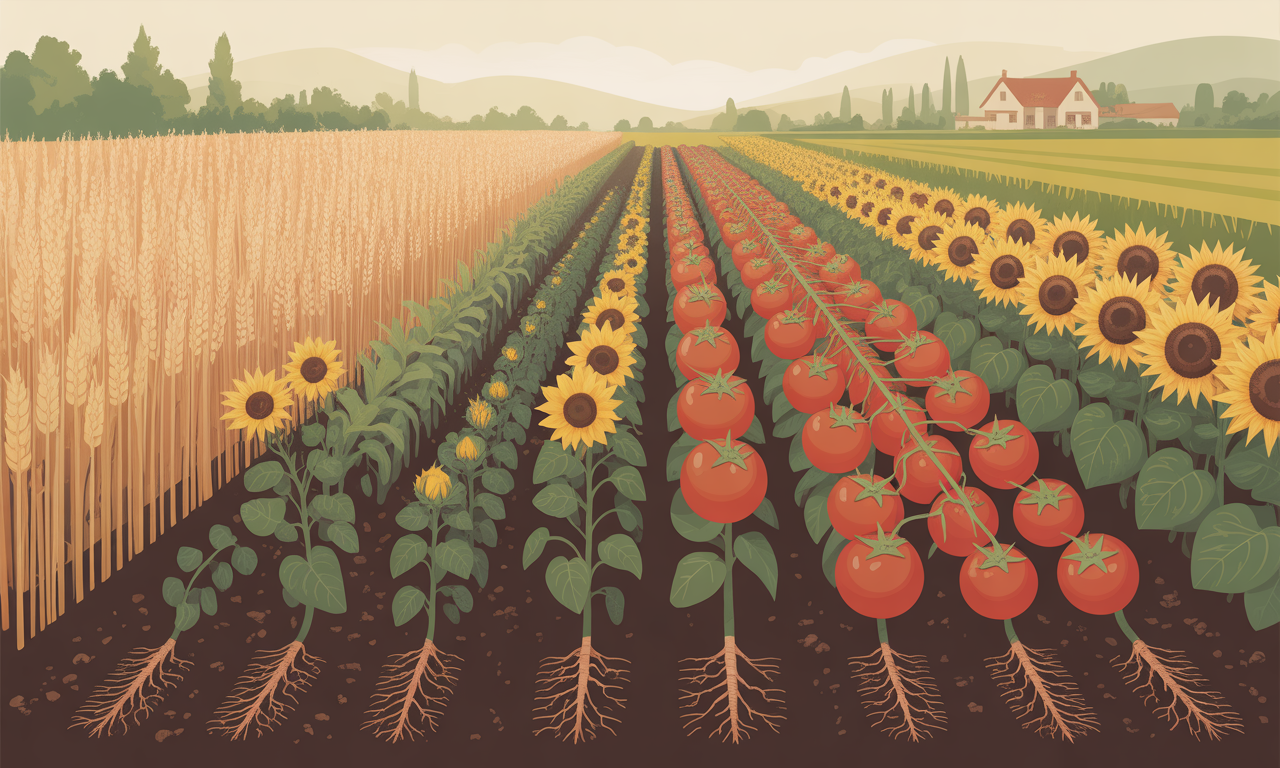
Regenerative principles remain the foundation—keep soil covered, diversify crops, integrate livestock, conserve water, and return organic matter. Biotechnology and AI strengthen these principles rather than replace them:
Enhanced Cover Crops
Cover crops selected with the help of genome data for local adaptability.
Smart Composting
Composting enhanced with bio-inoculants that accelerate humus formation.
Precision Irrigation
AI-enabled irrigation systems that release just the right amount of water.
Biodiversity Monitoring
Drone mapping to monitor biodiversity indicators like tree cover or hedgerow health.
The fusion of traditional practice, biotechnology, and AI becomes a synergy—farmers' wisdom amplified by modern tools.
Markets and Policies That Reward Care
Regeneration requires not just science but supportive economics. Procurement systems must value diverse, nutrient-rich crops like millets and pulses. Public programmes like midday meals can be engines for regenerative demand.
Policies can evolve soil health cards into digital "soil passports," integrating AI-based diagnostics with on-ground microbial treatments. Carbon credits and ecosystem service payments can flow directly to farmers, not intermediaries.

Here, biotechnology ensures verifiable improvements in soil biology, while AI ensures transparency in measuring outcomes. Together, they create trust in markets.
Culture, Community, and Ethics
Rabindranath Tagore wrote of harmony with nature, learning beneath open skies. Regeneration is not only agronomic but cultural: it flourishes in women's collectives managing compost pits, in youth acting as "soil stewards," and in villages that declare their commons free from residue burning.
A.P.J. Abdul Kalam believed rural youth could be leaders of innovation. Imagine a new cadre of "Green Leaders" trained in AI-based soil testing, microbial farming, and water budgeting. They would not migrate to cities in search of dignity; they would build dignity in their villages.
Measuring What Matters
Beyond yield per acre, we must measure health per hectare: soil carbon, infiltration rates, biodiversity counts, input costs, and nutritional value. Biotechnology supplies tools for measuring microbial richness; AI provides dashboards to track these changes over time.
5x
Soil Carbon Increase
Regenerative practices can increase soil organic carbon by up to 5 times
40%
Water Retention
Improved soil health increases water infiltration and retention capacity
60%
Input Cost Reduction
Farmers report significant reduction in external input costs over time
When these indicators improve, productivity tends to follow naturally. Regeneration is not slow—it is smart.
Toward a Just Regeneration
The first beneficiaries of regenerative agriculture must be those on degraded lands—tribal farmers, coastal communities, and rainfed smallholders. If technology bypasses them, it has failed ethically. Corporations can play a role, but only if they co-create value with farmers, not extract it. Wealth that circulates within villages is regeneration; wealth that drains outward is extraction.
The Covenant of Renewal
Pro-Nature
Working with natural systems to enhance biodiversity and soil health
Pro-Poor
Ensuring the most vulnerable farmers benefit first from technological advances
Pro-Future
Building systems that sustain productivity across generations
Regenerative agriculture is not nostalgia. It is a bold reimagining where soil biology, biotechnology, and AI converge to heal land and livelihoods. Swaminathan's evergreen revolution, Mashelkar's Gandhian engineering, and Kalam's PURA vision together frame an agriculture that is pro-nature, pro-poor, and pro-future.
The covenant is simple: leave the soil richer than you found it. Let technology serve as a servant to this covenant. Let the farmer, standing on her land, be the first to benefit. For in the soil's renewal lies the renewal of our future.