As the twenty-first century reshapes humanity’s relationship with food, nutrition is no longer judged merely by calories or taste. Increasingly, the world is turning toward functional foods—foods that do more than nourish, actively supporting health, resilience, and disease prevention. This transformation reflects a growing global realisation that food can be medicine, and that the future of agriculture lies not only in feeding populations, but in fortifying them. From turmeric and quinoa to moringa and probiotics, functional foods have emerged as major commercial categories. Yet among the most promising candidates for this revolution remains one of nature’s most overlooked plants: stinging nettle (Urtica dioica), popularly called Bichhu Buti (बिच्छू बूटी).
Long dismissed as a bothersome weed because of its stinging hairs, stinging nettle may in fact be one of the most nutrient-dense plants available for modern commercialisation. Rich in iron, calcium, magnesium, potassium, chlorophyll, vitamins A, C, and K, as well as anti-inflammatory polyphenols, flavonoids, carotenoids, and essential amino acids, nettle represents a powerful convergence of nutrition and therapeutic potential. Traditional medicine systems have long recognised its value for blood purification, anaemia, joint health, metabolic support, and urinary wellness. Modern nutritional science increasingly validates these uses, positioning nettle as an ideal candidate for contemporary functional food markets.
However, true commercial viability demands far more than cultivation alone. Transforming nettle into a globally competitive superfood requires scientific standardisation, biotechnology, advanced processing, and integrated supply chains. Nutritional variability across wild populations must be addressed through genotype selection, agronomic optimisation, and controlled cultivation systems to ensure consistent phytochemical profiles. Scientific breeding programs can identify high-yield, nutrient-dense cultivars optimised for commercial production. Tissue culture propagation, seed system development, and climate-resilient varietal improvement will be essential for scalable cultivation.
Post-harvest technology is equally critical. Nettle’s sting, perishability, and variable phytochemical stability necessitate processing innovations such as blanching, freeze-drying, spray-drying, micronisation, and bioactive compound preservation technologies. Advanced extraction systems can isolate polyphenols, chlorophyll, proteins, and medicinal compounds for use in nutraceuticals, fortified foods, beverages, and pharmaceutical formulations. Encapsulation technologies may improve bioavailability and shelf life, while food engineering can integrate nettle into protein powders, health bars, teas, capsules, soups, and functional ingredients for mainstream consumers.
Rigorous clinical validation is another indispensable step. Commercial superfoods increasingly depend not only on nutritional reputation but on evidence-based claims supported by antioxidant assays, anti-inflammatory studies, glycaemic response research, gut microbiome interactions, human clinical trials, and safety evaluations.
Without this scientific foundation, nettle risks remaining a niche herbal product rather than achieving large-scale global trust. Regulatory approvals, nutraceutical certifications, organic labelling, and standardised quality protocols will determine its market legitimacy. The point we are making is that it can be done, and we see no reason otherwise, as knowledgeable and competent people are already there across various organisations. What is lacking is a will.
In India, stinging nettle grows abundantly across tribal, Himalayan, and forested landscapes, where indigenous communities have historically used it for food, fibre, and medicine. Yet this natural abundance remains largely economically underdeveloped. Scientific mainstreaming of nettle could profoundly transform tribal economies—but only if paired with technology transfer, decentralised processing infrastructure, farmer cooperatives, digital traceability systems, and value-added manufacturing. Tribal producers must move beyond raw harvesting toward ownership within higher-value segments such as branded supplements, processed foods, botanical extracts, and wellness products. Blockchain-enabled sourcing, geographical indication (GI) tagging, biodiversity branding, and AI-supported agricultural extension systems could help convert traditional ecological knowledge into a globally competitive enterprise.
This intersection of biotechnology, food science, indigenous livelihoods, and climate-smart agriculture is where nettle’s real promise lies. Like quinoa in the Andes or moringa in India, nettle’s rise will depend on creating a full innovation ecosystem—not simply growing a plant, but engineering an industry. Our book, Village Republic 2.0: Harnessing Bioresources through NextGen Biology and Artificial Intelligence, makes this point clear and is well-received.
Consumer trends are increasingly favourable. Global demand for plant-based nutrition, immune support, clean-label supplements, regenerative agriculture, and biodiversity-based products continues to expand. Nettle’s combination of nutritional density, sustainability, and medicinal versatility uniquely positions it to capitalise on these shifts. Its current obscurity may therefore be less a limitation than a strategic advantage, offering an opportunity to define a new category rather than compete solely within established ones.
The future of food will belong to systems that unite biodiversity with technology, traditional knowledge with modern science, and sustainability with scalable commerce. Stinging nettle stands at this convergence point. Once dismissed as a stinging weed, it may evolve into a scientifically validated, technologically processed, commercially branded functional food capable of advancing preventive health while revitalising rural and tribal economies.
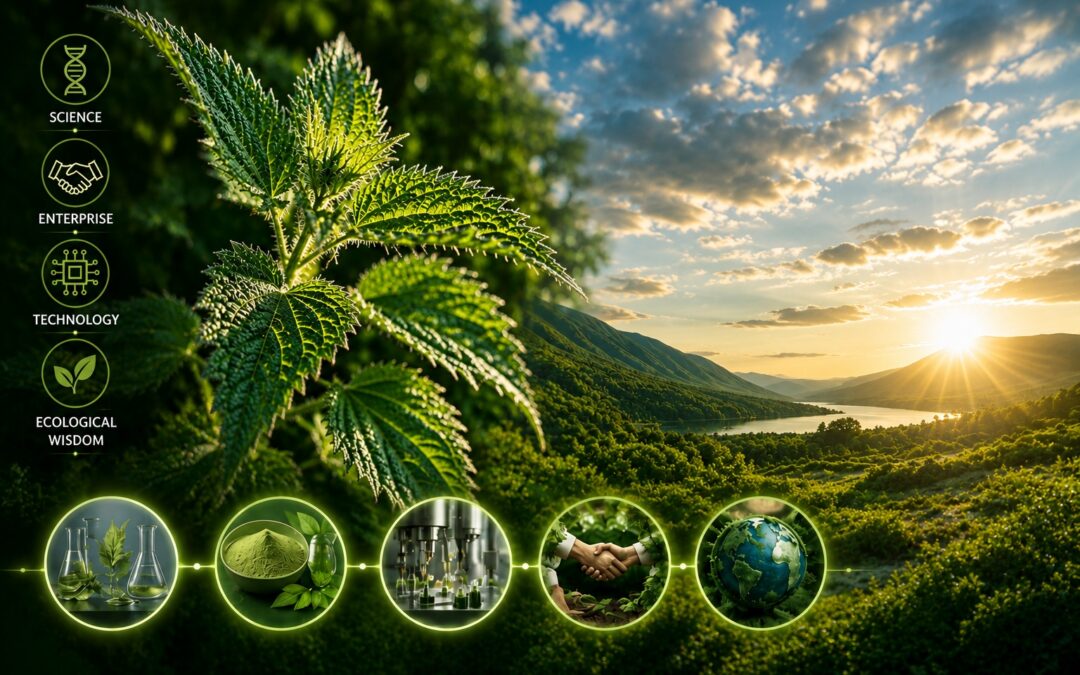
The next global superfood will not emerge solely through cultivation. It will emerge where science, enterprise, technology, and ecological wisdom intersect. In that future, stinging nettle may prove that one of humanity’s most powerful nutritional resources was hidden in plain sight all along. As Louis Pasteur famously observed, “In the fields of observation, chance favours only the prepared mind.”
— Dr Sanjay Kumar with Prof. Arun Tiwari
Discover the thrill of winning at nv casino login, your ultimate destination for exciting NV online game experiences.
Intuitive controls paired with vibrant graphics make the game enjoyable.