Language shapes how societies perceive resources, industries, and ecosystems. Terminology influences not only scientific understanding but also public policy, investment priorities, and cultural attitudes toward nature. In the expanding field of marine aquaculture, one widely used term increasingly appears conceptually outdated: seaweed. When marine algae are deliberately cultivated for food, pharmaceuticals, industry, and environmental services, referring to them as “weeds” becomes scientifically inaccurate and linguistically misleading.
The word weed has a specific ecological meaning. According to the Cambridge Dictionary, a weed is “a wild plant growing in an unwanted place, especially in a garden or field where it prevents cultivated plants from growing freely.” In agronomic terminology, weeds are species that interfere with crop production, compete for resources, or disrupt managed ecosystems. The defining characteristics of weeds are therefore clear: they are unwanted, harmful, or intrusive organisms within a cultivated system.
Cultivated marine algae do not fit this definition. On the contrary, they are intentionally farmed biological resources that contribute to food security, industrial production, and environmental sustainability. When a species is deliberately cultivated, managed, harvested, and economically valued, it ceases to be a weed by definition. It becomes a crop.
From a scientific perspective, what is commonly called “seaweed” encompasses a diverse group of marine macroalgae—macroscopic, multicellular photosynthetic organisms inhabiting oceans and coastal ecosystems. These macroalgae are broadly classified into three major phylogenetic groups based on pigmentation, cellular chemistry, and evolutionary lineage: Rhodophyta (red algae), Phaeophyceae (brown algae), and Chlorophyta (green algae).
This diversity is reflected in well-known species used around the world. Brown algae include kelps such as Laminaria and species of Sargassum, which can form vast underwater forests. Red algae include edible species like Porphyra (nori) and Palmaria palmata (dulse), while green algae include species such as Ulva, commonly known as sea lettuce. These organisms have been used by human civilizations for centuries as food, fertilizer, medicine, and industrial raw materials.
Their nutritional value alone challenges the negative connotation implied by the word weed. Many edible macroalgae are rich sources of iodine, calcium, iron, dietary fiber, vitamins A, B, C, and E, and essential amino acids. They also contain unique bioactive compounds such as phlorotannins, fucoidans, carrageenans, and alginates, which are increasingly studied for their roles in nutrition science, pharmacology, and biotechnology.
In several Asian cultures—particularly in Japan, Korea, and China—marine algae have long been integrated into everyday diets. Nori is widely used for sushi wraps, wakame is a staple ingredient in soups such as miso, and kelp provides flavor and nutrients to broths and salads. These foods are not accidental gifts of nature but the outcome of organized marine cultivation systems developed over centuries.
Beyond food, marine macroalgae are increasingly recognized as valuable industrial bioresources. Extracted compounds such as agar, alginate, and carrageenan are widely used as gelling agents, stabilizers, and emulsifiers in food processing, pharmaceuticals, cosmetics, and biotechnology. Seaweed-derived polysaccharides are also being explored in drug delivery systems, tissue engineering, nutraceuticals, and biomedical materials.
In agriculture, seaweed extracts are used as biostimulants and biofertilizers, enhancing crop growth, stress tolerance, and soil microbial activity. Such applications are gaining importance in sustainable and organic farming systems, where biological inputs are preferred over synthetic chemicals.
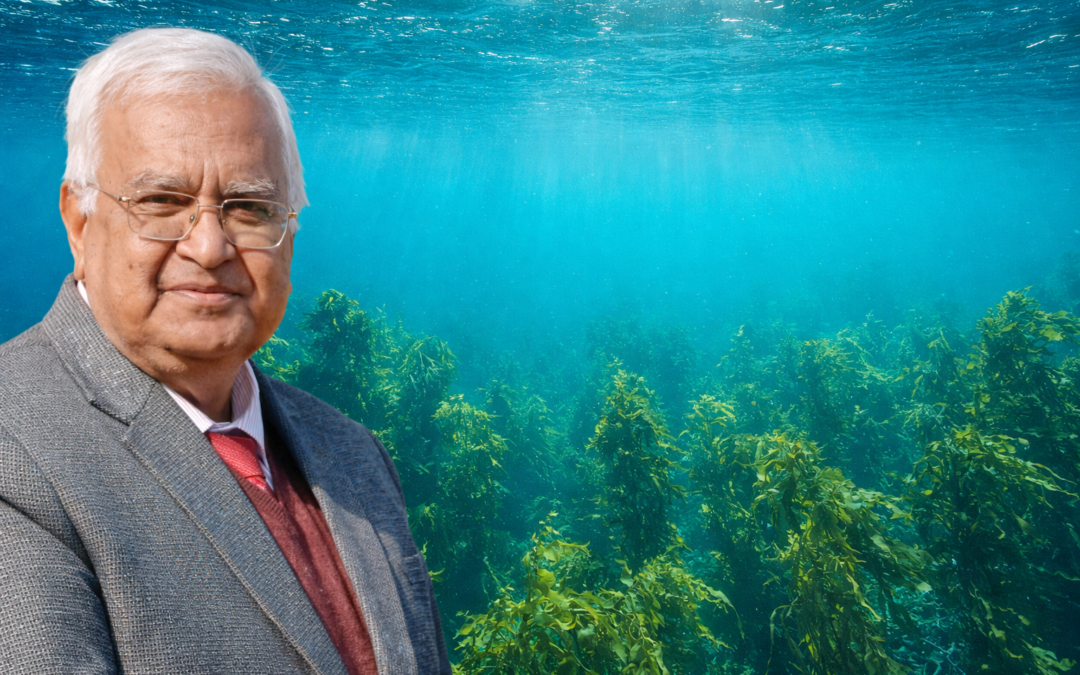
The ecological contributions of marine macroalgae are equally profound. Kelp forests and other macroalgal ecosystems provide nursery habitats for fish, crustaceans, and countless marine organisms, supporting coastal biodiversity and fisheries productivity. These underwater forests function in ways analogous to terrestrial forests, creating complex habitats that stabilize marine ecosystems.
Marine macroalgae also play a critical role in the global carbon cycle. Through photosynthesis, they absorb carbon dioxide and convert it into biomass, contributing to carbon sequestration in coastal waters. Their productivity supports oxygen generation, nutrient cycling, and the functioning of marine food webs.
Seaweed cultivation is increasingly recognized as one of the most sustainable forms of biomass production known today. Unlike terrestrial agriculture, marine algal farming requires no arable land, freshwater irrigation, or synthetic fertilizers. Instead, it relies on sunlight and the nutrients naturally present in seawater. This makes it a promising component of the emerging blue bioeconomy, particularly in regions where land and freshwater resources are limited.
In addition to sustainability advantages, seaweed farming has been proposed as a tool for addressing aspects of climate change. During growth, macroalgae absorb dissolved carbon dioxide and nutrients such as nitrogen and phosphorus from surrounding waters. Large-scale cultivation could therefore contribute to nutrient remediation in coastal ecosystems, reduction of eutrophication, and localized carbon capture.
Recognizing these benefits, international scientific discussions—including those referenced in climate research frameworks such as the Intergovernmental Panel on Climate Change (IPCC)—have begun examining the potential role of marine macroalgae in climate mitigation, sustainable food systems, and coastal resilience.
Given these contributions, the continued use of the word seaweed may inadvertently diminish the perceived value of this resource. Linguistically, the term carries a negative association with nuisance vegetation that must be removed. Such terminology can subtly influence public perception, policy priorities, and investment decisions.
Agricultural history demonstrates that terminology matters. Crops such as quinoa were once dismissed as minor plants, but their nutritional and agronomic value has since gained global recognition. Once the narrative changed, the crop’s status transformed accordingly.
Marine macroalgae may now be undergoing a similar transition. As the global demand for sustainable food, renewable materials, and climate solutions increases, these organisms are increasingly recognised not as marine weeds but as marine crops.
It may therefore be scientifically and conceptually appropriate to adopt terminology that reflects their true biological and economic character. Terms such as marine macroalgae, cultivated marine algae, ocean crops, or thalassacrops, from the Greek thalassa (sea), within the context of modern aquaculture and the emerging blue bioeconomy.
In conclusion, the word weed denotes an unwanted and disruptive species. Cultivated marine macroalgae represent the opposite: they are valuable resources contributing to nutrition, industry, environmental resilience, and sustainable economic development. As marine aquaculture expands across the world’s oceans, it becomes both scientifically logical and linguistically responsible to reconsider the nomenclature used to describe these organisms.
The language of science must evolve as new knowledge is generated. When humanity cultivates life in the ocean with care, knowledge, and purpose, we are not growing weeds—we are cultivating the agriculture of the sea or Thalassoculture.
— Dr Sanjay Kumar, Prof. Arun Tiwari
Автосервис Тойота в Москве предлагает широкий спектр услуг. Профессионалы помогут вам с ремонтом и техническим обслуживанием.
Если вам нужен качественный и надежный автосервис Toyota в Москве, мы предлагаем широкий спектр услуг для вашего автомобиля.
Работа с автомобилями этой марки требует особого подхода. Каждый механик проходит специальное обучение и сертификацию.
В автосервисе установлено современное оборудование. Благодаря этому, мы можем гарантировать качество выполняемых работ.
Вы получите качественное и профессиональное обслуживание вашего автомобиля. Мы ценим каждого клиента и стремимся к его удовлетворенности.